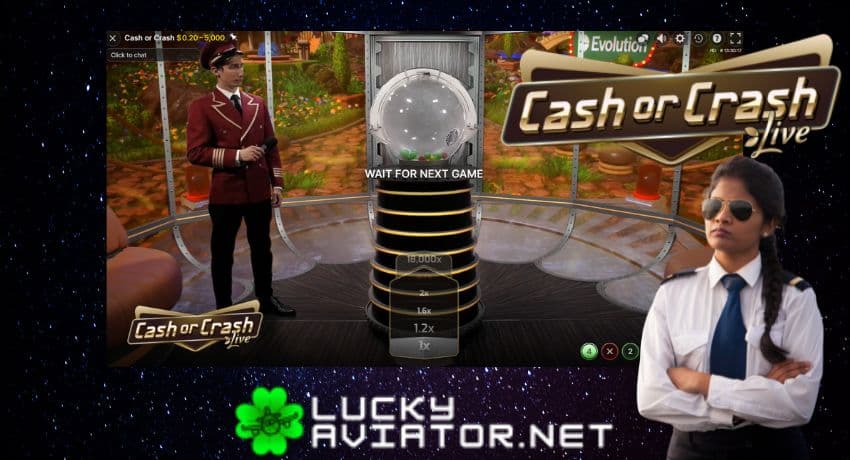
The game Cash or Crash Live creates its own niche in the realm of live game shows https://cashorcrashcasino.com/. Its appeal resides in a powerful blend of studio spectacle and game design that turns every round into a personal test of nerve. This isn’t just a spin of a roulette table. Here, you are in the pilot’s seat, making decisions that influence your payout. The premise draws you in with a climbing multiplier, then challenges you to take it before a hidden « crash » clears the board. To maximize your experience, you need to look past the lights and understand its actual mechanics. Let’s break down the phases, the presenter’s part, the mathematics of risk, and what players can realistically do to steer through the excitement.
The Main Goal and Core Mechanics
The aim of Cash or Crash Live is easy on the outside. You need to decide when to exit a growing multiplier before a hidden « crash point » terminates the game and takes your earnings for that stage. Each game begins with players putting bets. A rocket then starts its journey, and a multiplier commences climbing from 1x. The trip has various stages. Before launch, a hidden crash multiplier is set for every stage, concealed from everyone. As the number increases, players individually opts to hit « Cash Out, » securing that multiplier on their bet, or to continue. If the rocket reaches the hidden crash point before a player cashes out, they forfeit their wager for that phase. This pattern of danger and gain happens over various rounds. Those who endure accumulate their winnings step by step.

Dissecting the Game Phases
Think of the game as a series of distinct segments, every one a new bet. Avoiding a crash doesn’t knock you out. You move to the following stage with your built-up winnings safe, then commence the risk process all over again on the next leg of the rocket’s journey. This framework is everything. It generates a drama, with tension that intensifies as you go. The announcer fuels the excitement, announcing how many players are still aboard the rocket as the multiplier reaches impressive levels. Initial phases often involve cautious plays. Later stages, with their jackpot-level multipliers, entice you to bet the winnings https://www.wikidata.org/wiki/Q8700517 you’ve already banked. This structure is the heart of the game’s drama. It forces a string of individual, stressful decisions instead of only one.
From Low to High Risk: The Risk Escalation
Observe the color-coded path the rocket takes. It’s a core part of the game’s visual lexicon. The opening segment is typically a « Green Zone, » a less dangerous phase where a crash is still on the table. Next, the rocket may reach an « Amber Zone, » a obvious warning that risk is growing. The last segment is the « Red Zone. » At this point, multipliers look their most attractive, but the probability of a crash is mathematically at its highest. Those hues are not merely cosmetics. They give you a visual shorthand for the degree of risk at any given time. They make an intangible probability feel tangible. Understanding the game is deliberately warning you about increasing volatility is a essential piece of tactical knowledge.
Strategic Frameworks and Player Psychology
No approach can beat the fundamental randomness. But you can employ systematic techniques to handle your money and your emotions. The main conflict is a compromise. Do you guarantee assured gains, or pursue explosive profits? Gamblers often adopt techniques like the « Fixed Cash-Out. » Here, you decide ahead of time to settle at a specific multiplier, say 2x, in every phase. This aims for steady, small wins. The contrary is the « Let It Ride » approach, where you wager many phases for a opportunity for a massive win, acknowledging that losses will happen. A more measured approach is the « Percentage Bankroll » system, where you modify your stake based on your present profits. The most important element, though, is in your mind. Can you overcome the « greed factor » when the multiplier rises? Can you avoid disappointment after an premature loss? Your most powerful tool is creating firm guidelines for yourself before the game even starts.
Frequent Errors to Steer Clear Of
Watch out for a few classic mistakes. The most destructive is « chasing » a failure. This signifies impulsively increasing your stake after a defeat, which goes against the process’s phase-independent nature. Another misstep is trusting the « hot hand » illusion, believing a streak of big payouts is probable to carry on. Permitting the commentator’s talk or the actions of other users distract you from your own pre-set plan is common. Also, don’t misread the sections. The Amber and Red Zones aren’t challenges to overcome. They are alerts that the risk has jumped. Starting any stage without a specific aim transforms the activity from a process of judgment into a sheer emotional ride. That ride hardly ever concludes favorably.
Mathematical Underpinnings and Risk
Let’s examine the numbers that make the game tick. The crash multiplier for each level is based on a defined statistical distribution. Common, lower multipliers for instance 1.2x or 1.5x are very likely to occur. Extremely high multipliers are possible, but are exponentially more rare. This design ensures the game stable. The regular, small crashes fund the occasional, large potential wins. The « Return to Player » (RTP) is a theoretical percentage across millions of rounds. In your single session, the swings are wild. You’re not playing against the casino in a conventional sense. You’re making choices against a hidden, random number. Remember these points:
- Independent Stages: Each stage’s crash point is its own event. A 1.2x crash in the first stage does not predict the second.
- No Forecasting Ability: The RNG eliminates any predictable patterns. Historical crashes or big wins do not influence what comes next.
- Casino Margin: The system incorporates a house advantage, as reflected in the publicly stated RTP from the developer.
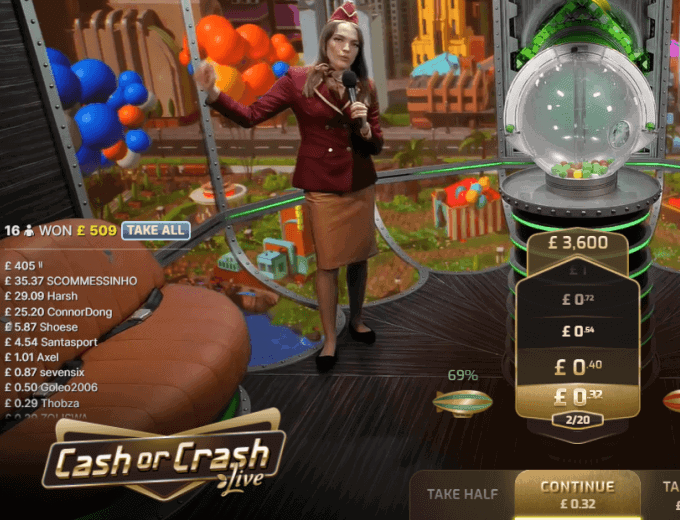
The purpose of the on-air host and RNG
The on-air host is more than just talk. They determine the game’s emotional pace. While they have no impact on the result, they masterfully build suspense. They announce the climbing multiplier and offer live updates on what percentage of the crowd is cashing bloomberg.com out at each level. That social cue can affect your head. But remember, the host works separately from the game’s engine: the Random Number Generator (RNG). The crash point for each stage is established by a certified RNG the instant the stage begins. This ensures fairness and total unpredictability. The host has no clue when the crash will happen. Their job is entertainment. The RNG’s job is certifiable fairness. This combination merges transparent live action with provably random results.
Conclusion: A Symphony of Fortune and Choice
Cash or Crash Live is a captivating mix of sheer luck and intentional choice. Its mechanics are structured to weave a narrative of escalating stakes, driven by a transparent RNG and brought to life by a charismatic emcee. Measuring winning as a enjoyable and potentially profitable session hinges on various elements. It’s not so much about predicting the unpredictable and rather about understanding how the game is designed. It calls for handling your money with self-control and managing the psychological impulses the game skillfully stimulates. By studying its stages, respecting its numeric basis, and adhering to a custom plan, you can alter your perspective. You go from bewildered guesswork to enlightened participation in a exceptionally intense live game show.